
Most home security cameras are built around the assumption that internet is always available. For the majority of households that assumption holds up fine — but there are real situations where it breaks down. The ISP goes out for a few hours. The camera needs to go somewhere Wi-Fi doesn’t reach. Or the location has no power or cellular signal at all. Each of these calls for a different approach, and the right camera for one scenario won’t necessarily work for another. This guide breaks down all three and points to the best options for each.
Scenario One: Your ISP Is Down
This is the most common situation. The internet connection drops — a storm, an outage, a router problem — and suddenly a camera that seemed to be working fine is blind. The reason is that most consumer security cameras route everything through the cloud: live view, motion detection, and clip storage all depend on an active internet connection. When it goes down, so does the camera.
The fix is a camera that supports local storage via a microSD card. Even when the internet is out, the camera continues recording motion events directly to the card. When the connection returns, cloud sync resumes and nothing is missed.
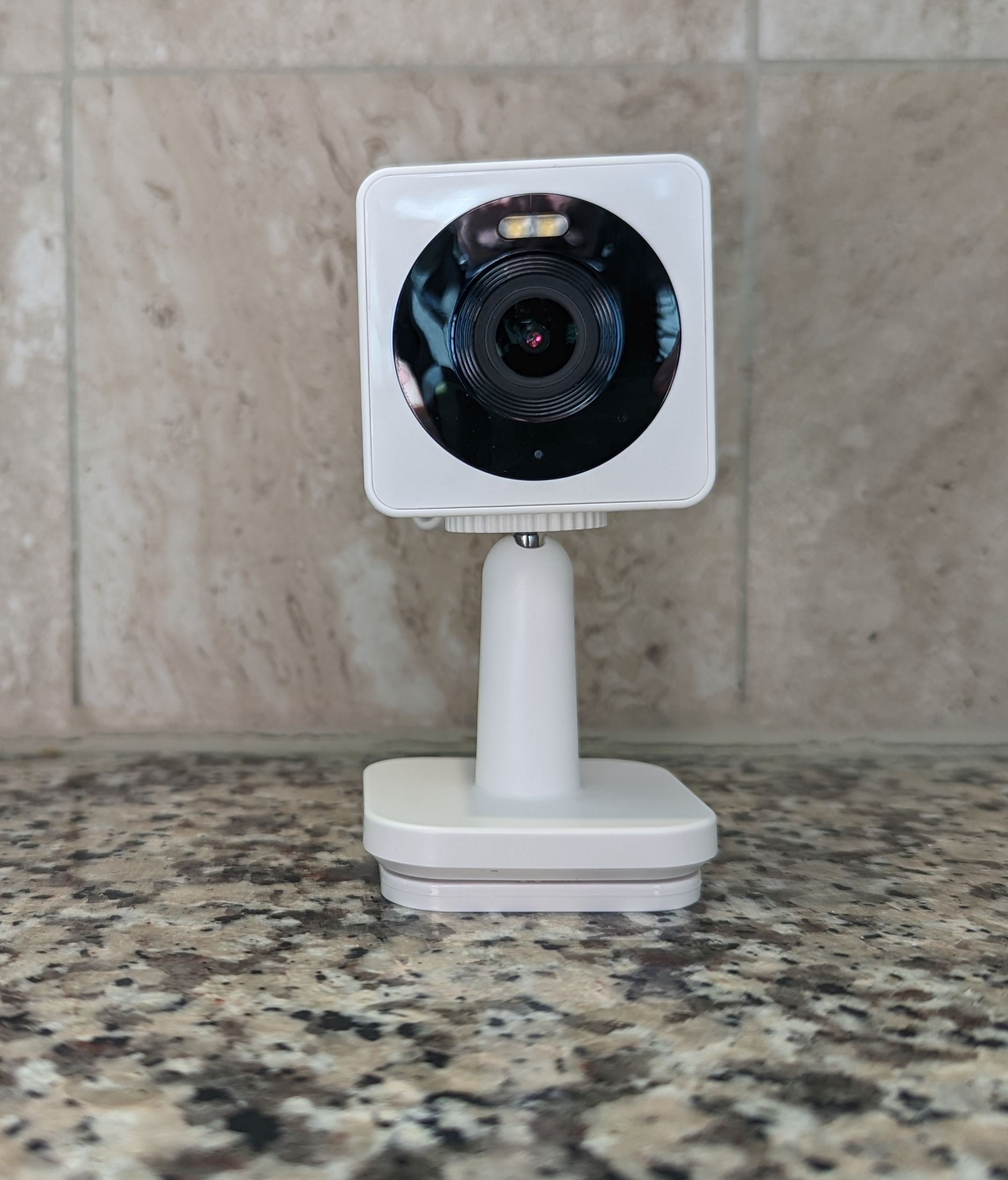
The Wyze Cam OG handles this well. It supports both cloud recording and local microSD storage simultaneously, so motion events are captured on the card whether or not the internet is available. It is a wired camera — power is still required — but for the typical ISP outage scenario that is not a problem. A 32GB or 64GB card provides several days of continuous local recording. The Wyze Cam v3 and Wyze Cam v4 both work the same way and are worth considering if a newer or higher-resolution model is preferred.
One camera line to avoid for this use case is the Google Nest Cam. Every Nest Cam model routes through Google’s cloud infrastructure — if the internet connection is down, live view and recording are both unavailable. There is no local fallback.
Scenario Two: No Wi-Fi at the Location
Some camera locations are simply too far from the router to get a reliable Wi-Fi signal — a detached garage, a barn, the back of a large property, a construction site, or a vacation cabin. A Wi-Fi extender or mesh Wi-Fi system can solve some of these problems, but when the distance is genuinely too great or the location has no wired infrastructure to extend from, a cellular camera is the practical answer.
4G LTE cellular cameras use a SIM card and a cellular data plan instead of Wi-Fi. The EbitCam 4G LTE Cellular Security Camera is a solid option in this category. It supports Verizon, AT&T, and T-Mobile networks, comes with a solar panel and high-capacity battery for completely wire-free operation, and shoots 2K video with 360-degree pan and tilt coverage. A SIM card with trial data is included; after the trial period a monthly data plan is required through the carrier or a third-party IoT data provider. This is an ongoing cost to factor in, but for a location with no Wi-Fi it is often the only workable solution.
The cellular approach also has a useful secondary benefit: because the camera does not depend on the home network, it keeps working even if the home router goes down.
Scenario Three: No Power and No Wi-Fi
This scenario covers locations with no electrical outlet and no Wi-Fi signal — a detached shed, a rural outbuilding, a back fence line, or a property corner that is simply too far from the house. The good news is that a battery-powered camera with a microSD card handles this situation well. No Wi-Fi is required for local recording — the camera writes motion-triggered clips directly to the card whether or not it is connected to a network. Footage is reviewed by pulling the card, or remotely via the app when Wi-Fi is eventually in range.
The Tapo C425 MagCam 2K+ is a strong pick for this scenario. It runs on a 10,000mAh built-in battery rated for up to 300 days on a single charge, shoots 2K video with a 150-degree field of view, and supports microSD cards up to 512GB for local storage with no subscription required. The IP66 weatherproof rating means rain, dust, and cold are not concerns. A solar panel accessory is available separately if the location gets reasonable sunlight and completely hands-off operation is the goal. When Wi-Fi is available nearby, the camera connects and syncs — but it keeps recording either way.
For truly remote locations where there is no power, no Wi-Fi, and no cellular signal — and where retrieving an SD card periodically is the expected workflow — a battery-powered trail camera remains a practical fallback. Stealth Cam trail cameras run on batteries for months, write clips to an SD card, and are built for unattended outdoor use. They lack the video quality and form factor of a dedicated security camera, but for genuinely off-grid monitoring where nothing else is practical, they get the job done.
Choosing the Right Approach
The three scenarios above call for three different solutions, and it helps to be clear about which problem is actually being solved. For most homeowners the answer is simply a camera with local microSD storage — that handles the most common scenario (ISP outages) without any extra equipment or ongoing cost. For genuinely remote locations with no Wi-Fi, a 4G cellular camera is the practical choice, with the understanding that a data plan adds ongoing expense. For truly off-grid locations with no power or connectivity at all, a trail camera is the most reliable option despite its limitations around real-time access.
Bottom Line
For ISP outages, any camera with a microSD card slot — like the Wyze Cam OG or Wyze Cam v4 — keeps recording locally when the cloud goes offline. For locations without Wi-Fi, a 4G LTE cellular camera like the EbitCam handles coverage anywhere with cellular service. For locations with no power and no Wi-Fi, the Tapo C425 battery camera records to a microSD card with no connection required, and its 300-day battery life means months of unattended operation. Trail cameras remain the option of last resort for completely off-grid locations with no practical alternative.